--- title: "Passenger Flow Analytics for Airport Terminals | Fortune AI" description: "Connect terminal schedules with queue and lane activity. AI recommends coverage changes for airport operations to approve and verify in the next comparable period." canonical: https://www.fortuneai.app/industries/airport-operations/ language: en --- 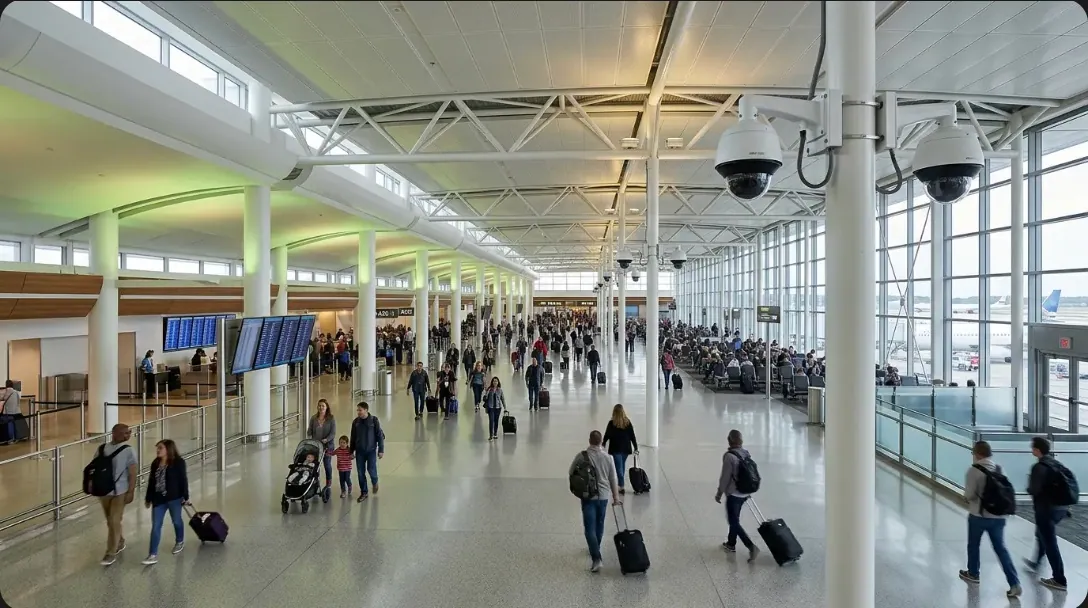 [Industries](https://www.fortuneai.app/industries/) Airport operations Airport terminals # Measure passenger flow across the terminal Connect terminal schedules with queue and lane activity. AI recommends coverage changes for airport operations to approve and verify in the next comparable period. [Request a demo](https://www.fortuneai.app/book/?industry=airport) Start with the decision ## See where queues form before service levels fall Define the area, service window, and operating response once  CAM 18 · NORTH CHECK-IN Queue pressure matched Live queue analysis ### Connect passenger demand with active capacity - 01 Observe Measure arrivals, queue growth, and release - 02 Connect Match demand with open lanes and service time - 03 Prepare Return pressure by area and service period Queue analysis ready throughout the day Fortune AI platform ## Where is lane capacity falling behind arrivals? Open capacity before the peak. Review passenger wait alongside the camera evidence for the same operating period. - 01 · Ask Where is lane capacity falling behind arrivals? - 02 · Verify Review the interval and supporting footage - 03 · Compare Test passenger wait on matched periods Where is lane capacity falling behind arrivals? North check-in falls behind arrivals. Review the camera evidence, the measured passenger wait, and the next action: open capacity before the peak. From queue to action ## Open capacity before the wait builds See the service area, time window, and footage behind the recommendation [01 Where is lane capacity falling behind arrivals? Demand](#review-question-1) [02 When does the queue start building? Evidence](#review-question-2) [03 What should the terminal team adjust? Lane plan](#review-question-3) Fortune AI Agent Terminal review · North check-in You Where is lane capacity falling behind arrivals? Fortune AI ### North check-in needs a capacity review In this example, arrivals grow faster than the active lanes can serve passengers before the morning peak You When does the queue start building? Fortune AI ### Review the build-up before the peak Compare the arrival window with active lanes and the footage behind the queue events 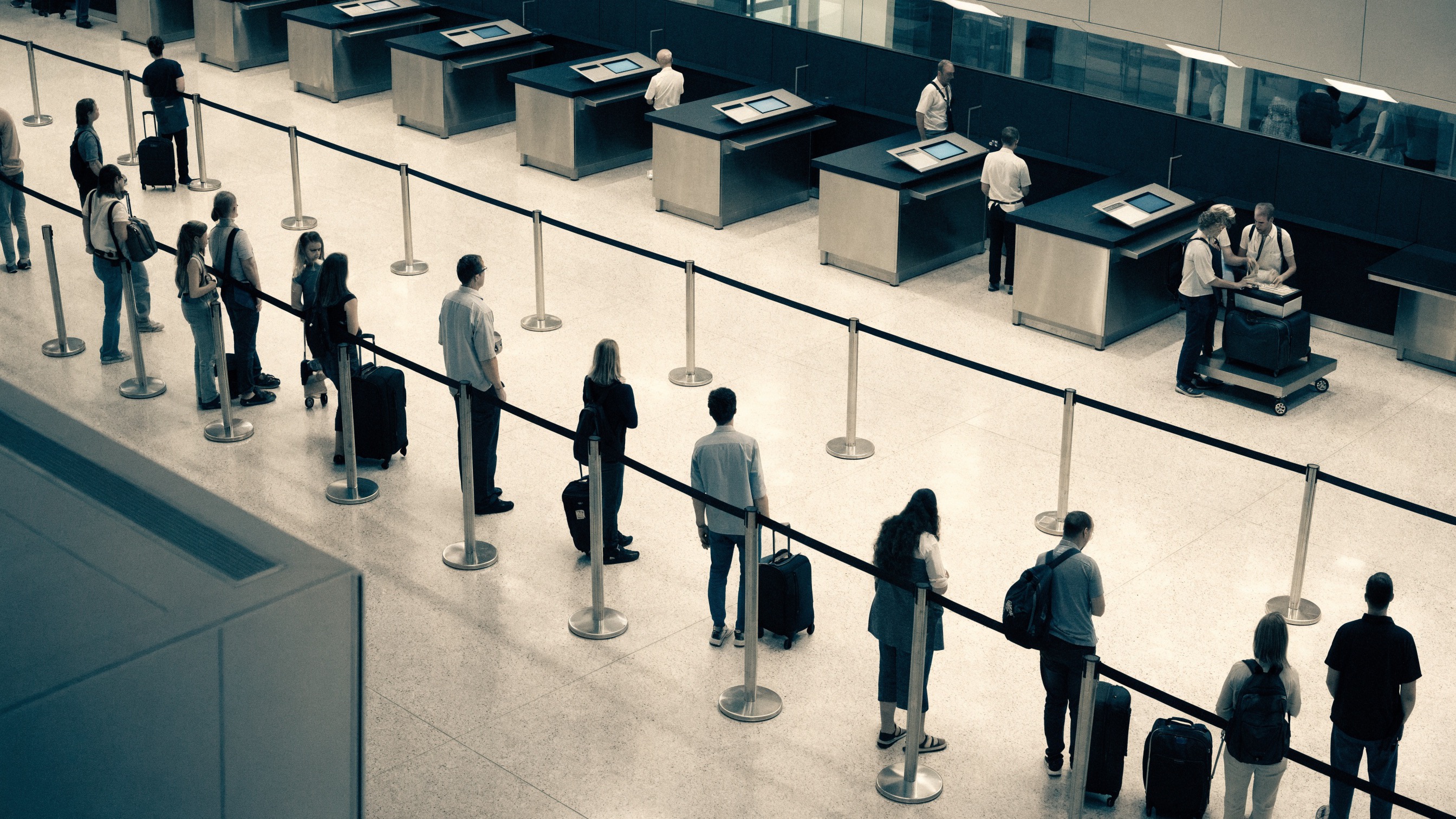 Sample camera view Exact footage stays attached to each reviewed event - 06:55 Queue begins to build - 07:20 Active capacity falls behind - 07:45 Peak operating window You What should the terminal team adjust? Fortune AI ### Review an additional lane before the peak At a later review, airport operations approves lane coverage. Compare queue waiting and throughput during the next similar demand period. Terminal throughput ## Match open lanes to arriving demand Compare passenger arrivals, queue growth, and open lanes to review check-in capacity. Operating context Airport passenger flow analytics compares arrivals, queue growth, and active service lanes. Use the timing to review where check-in capacity falls behind demand and when to adjust coverage Further reading - [Watch the airport operations demo](https://www.fortuneai.app/videos/airport-passenger-flow-analytics-demo/) - [airport passenger flow analytics guide](https://www.fortuneai.app/resources/airport-passenger-flow-analytics/) - [crowd and venue analytics](https://www.fortuneai.app/industries/venue-operations/) 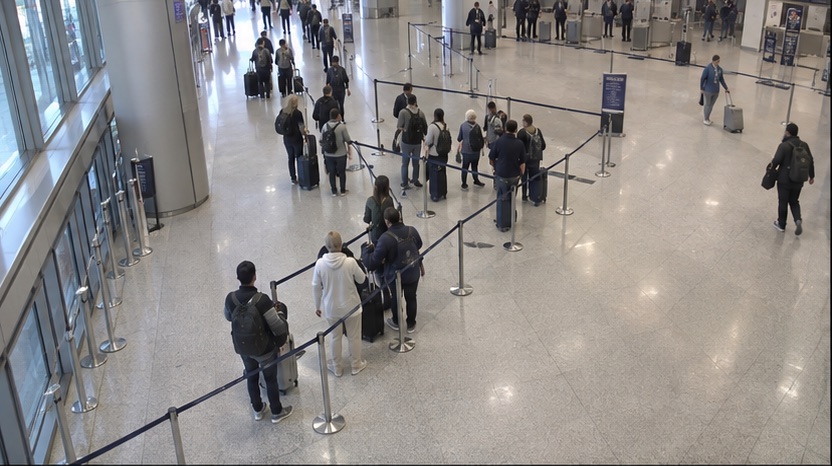 [View image at full size](https://www.fortuneai.app/assets/industry-metric-stories/airport-01.jpg) 01 ### Queue growth Track queue formation, length, dwell, and release by terminal area. Respond to sustained growth before the queue reaches adjacent circulation. 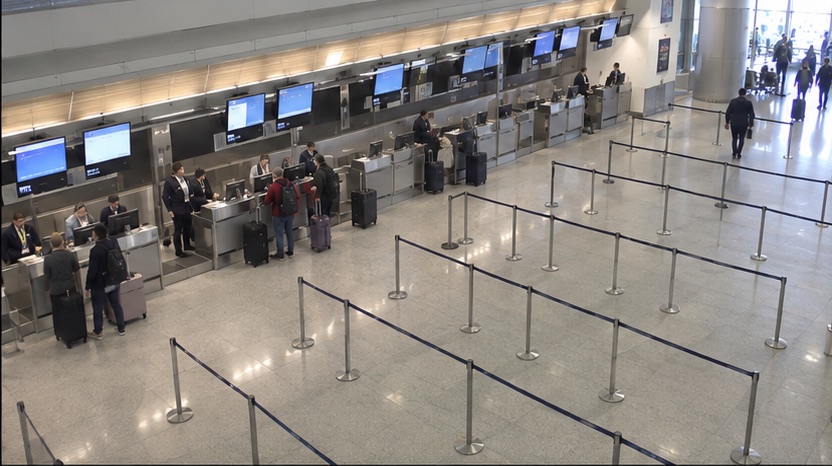 [View image at full size](https://www.fortuneai.app/assets/industry-metric-stories/airport-02.jpg) 02 ### Lane utilization Compare open service capacity with passenger demand by period. Direct passengers or adjust open lanes using the same demand view. 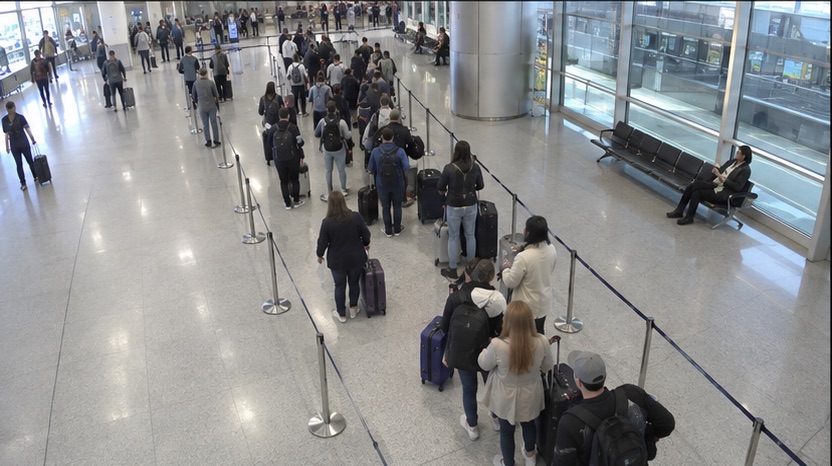 [View image at full size](https://www.fortuneai.app/assets/industry-metric-stories/airport-03.jpg) 03 ### Passenger wait time Measure time from queue entry to service completion. Compare checkpoints and periods before changing coverage standards. 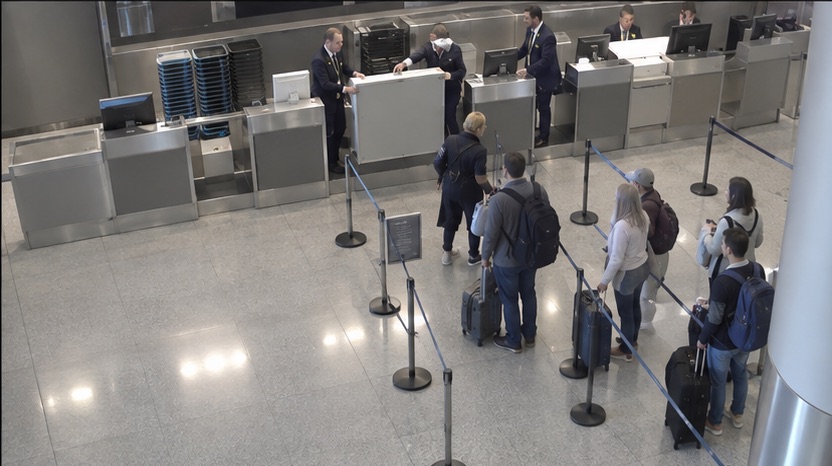 [View image at full size](https://www.fortuneai.app/assets/industry-metric-stories/airport-04.jpg) 04 ### Service response Measure time from growing pressure to an operating change. Review how quickly teams react when demand exceeds active capacity. Start with one terminal decision ## See what your existing cameras can measure [Request a demo](https://www.fortuneai.app/book/?industry=airport) FAQ ## Questions before measuring passenger flow. Terminal zones, queue definitions, active capacity, privacy, and matched flight waves. [Discuss your site's requirements](https://www.fortuneai.app/book/?industry=Airports%20and%20transit)[Read the airport passenger flow guide](https://www.fortuneai.app/resources/airport-passenger-flow-analytics/)[General questions & other industries](https://www.fortuneai.app/faq/#industry-airport-operations) ### Why does a terminal queue grow when several lanes are open? Compare scheduled demand, passenger arrivals, actively serving lanes and service time in the same interval. AI highlights where capacity falls short and recommends lane coverage for a later operating review. Airport operations approves the plan, then compares waiting and throughput in the next similar demand period. What to measure Queue-entry-to-service wait and active lane-minutes by interval. ### How quickly do teams react to a growing queue? Define a visible queue threshold and record the next observed staffing or lane change. Review the delay with the operations team and shift plan. A timeline shows sequence; it does not by itself establish why a decision was delayed. What to measure Threshold-to-operating-change time, with exceptions reviewed by staff. ### Will adding a lane actually shorten passenger waits? Compare similar arrival waves, service requirements, and operating periods before and after a lane change. Separate queue waiting from processing time. Use aggregate flows; this measurement does not identify passengers or determine security risk. What to measure Median and tail wait, processed flow, and active capacity in matched periods. ### What scope and privacy requirements should we agree on? Agree on the monitored areas, queue boundaries, and service endpoints. Measurements and clips support operating review, not security decisions or passenger identification.