--- title: "How to Reduce Dock-to-Stock Time | Fortune AI" description: "Find where receiving slows between unloading, checks, staging, and putaway. Measure dock-to-stock time with WMS events, existing cameras, and supporting clips." canonical: https://www.fortuneai.app/resources/reduce-dock-to-stock-time/ language: en --- [Resources](https://www.fortuneai.app/resources/) / Reduce dock-to-stock time # How to reduce dock-to-stock time A trailer can be empty while the receipt is still hours from available stock. Put WMS timestamps beside the visible unloading, staging, and movement intervals to see which handoff keeps the goods waiting. 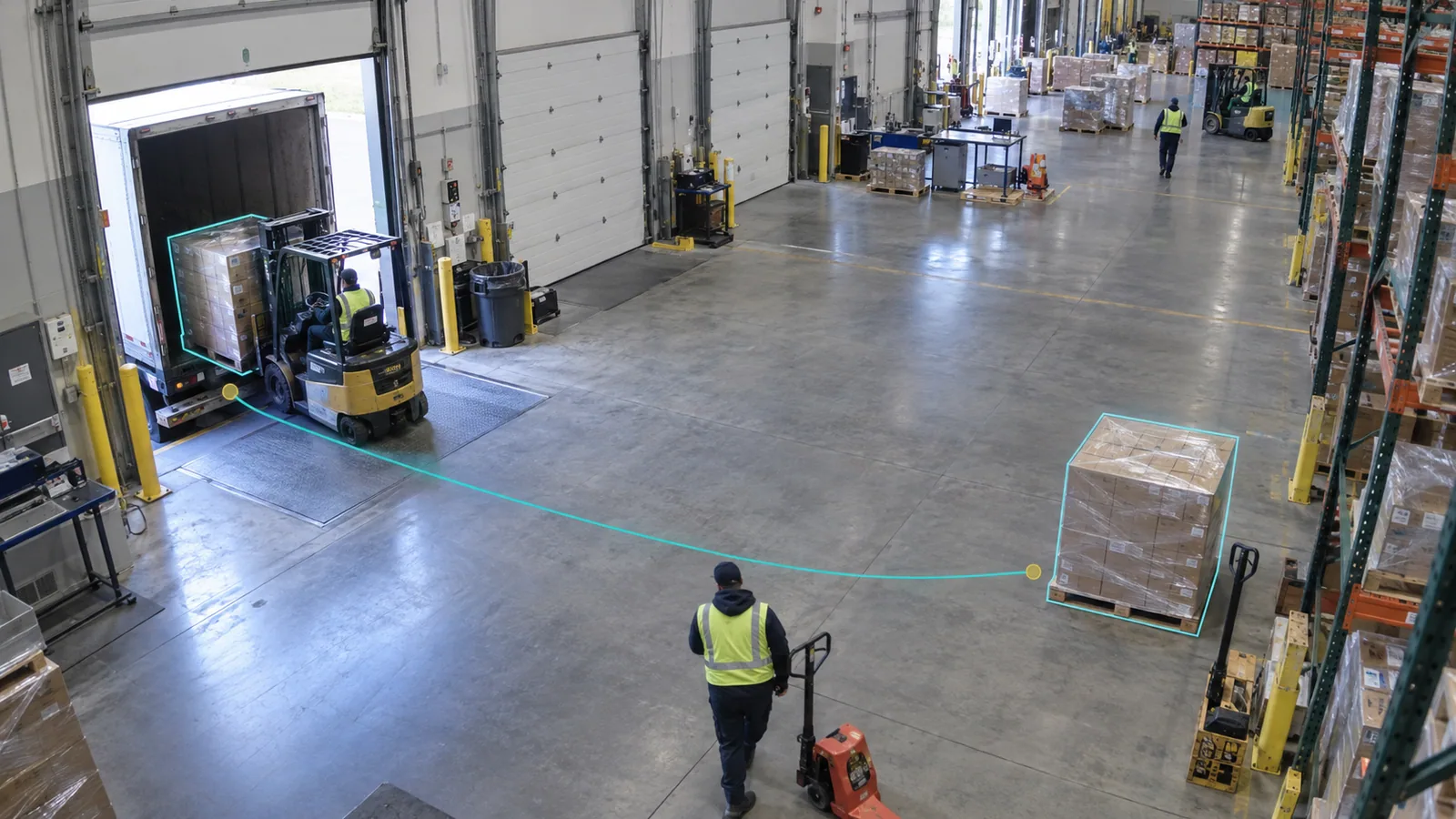 On this page [The approach](#dock-answer)[Define the clock](#dock-definition)[Find the delay](#dock-causes)[Choose the action](#dock-actions)[Plan a pilot](#dock-pilot) ## Find the wait Start with the receipts that run long most often. Time unloading, checks, staging, task release, and putaway separately. When the same wait recurs at one handoff, change its rule or owner and compare similar loads afterward. 01 · Define the clock ## Start and end the clock at defined events For one site, agree on a start event and an end event before comparing results. A practical start is unloading at the assigned door. A practical end is accepted putaway in the WMS. If inventory becomes available later, report that system delay separately. Trailer queue time before the door is useful, but it is not the same interval. ### System events - Appointment, arrival, and assigned door - Receipt, exception, and task-release timestamps - Accepted putaway or stock-available event ### Visible events - Unload start and finish - Receiving check and staging dwell - Movement to the putaway handoff ### Keep separate - Incomplete receipts and missing endpoints - Load type, shift, and exception class - Camera gaps, occlusion, and timestamp drift 02 · Locate the delay ## One receipt, several possible delays The total can grow for different reasons: doors are unavailable, unloading pauses, receipt checks create exceptions, staging space is full, putaway tasks are released late, or forklifts wait for the next handoff. Keep each interval for the same receipt so a fast unload does not hide a long staging wait. - Match comparable receipts. Compare similar shipment classes, appointment conditions, and shifts. - Review the tail. Use the median and a high percentile, plus incomplete-event share. Averages alone can hide repeated outliers. - Open the supporting clips. Review the visible wait before assigning the cause to labor, space, scheduling, or equipment. 03 · Match the fix ## Match the fix to the delay Use the delayed stage to choose the first operational change to test | Observed delay | First change to test | Evidence to compare | | --- | --- | --- | | Before the door | Appointment spacing, arrival rules, or door assignment. | Arrival-to-door time and occupied-door availability. | | During receiving checks | Document readiness, exception ownership, or inspection sequence. | Check duration, exception type, and resolution time. | | In staging | Space allocation, task release, or downstream availability. | Staging dwell, occupancy, and putaway-ready time. | | During movement | Travel route, dispatch rule, or equipment coverage. | Loaded moves, waiting, route obstruction, and completed receipts. | 04 · Test one change ## Test one receiving change Choose one receipt class and a representative set of shifts. Record the definition, sample size, exclusions, missing events, median, high-percentile time, and completed receipts. Compare the same conditions after one operational change. Keep the source timestamps and supporting footage with each exception. [Discuss your receiving flow](https://www.fortuneai.app/book/?industry=3pl-distribution) References ## Sources - [Fortune AI warehouse measurement protocol](https://www.fortuneai.app/resources/warehouse-measurement-protocol/) Definitions, sampling, acceptance rules, and limits for warehouse measurements. - [GS1 Logistic Label Guideline](https://www.gs1.org/standards/gs1-logistic-label-guideline/1-3) How logistics-unit identifiers connect physical units with electronic records. Continue reading [Explore 3PL receiving analytics](https://www.fortuneai.app/industries/3pl-distribution/)[Use the warehouse measurement protocol](https://www.fortuneai.app/resources/warehouse-measurement-protocol/)[Review other warehouse bottlenecks](https://www.fortuneai.app/resources/warehouse-operations-pain-points/)[Verify warehouse inventory handoffs](https://www.fortuneai.app/industries/warehouse-operations/) Article details [Fortune AI Technologies](https://www.fortuneai.app/about/) Published September 28, 2026 · Reviewed September 28, 2026 Method Fortune AI's operational measurement method separates one receiving cycle into observable stages, keeps WMS events distinct from camera-observed events, and reports missing or uncertain endpoints instead of estimating them.