
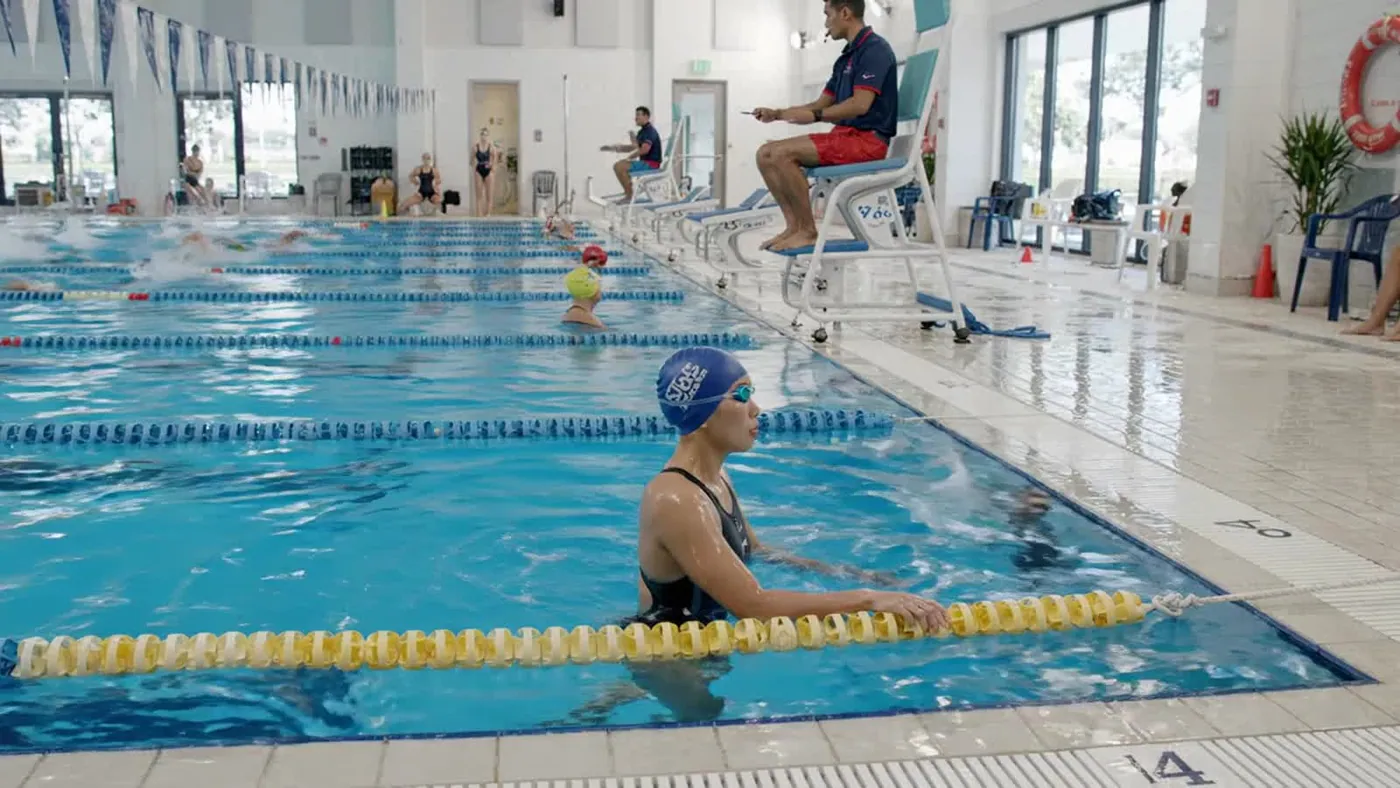

Real-time AI drowning detection.Built to support lifeguards.
SAFE SWIM is Fortune AI's AI drowning detection system for commercial pools. It analyzes camera footage in real time, detects possible distress, and alerts the assigned lifeguard with the location and camera view. It supports on-site response without replacing lifeguards or active supervision.
SAFE SWIM platform
Detect distress. Alert the lifeguard.
Monitor pool activity in real time. Send the affected zone and camera view to the assigned lifeguard, then track acknowledgement and on-site response.
- 01 · DetectIdentify possible distress in the monitored zone
- 02 · AlertNotify the assigned lifeguard with the camera view
- 03 · RespondAcknowledge the alert and respond on site
SAFE SWIM detects possible distress in the monitored pool and sends an alert to the lifeguard's watch. The lifeguard enters the pool, supports the swimmer, and brings the swimmer to the pool edge.
Detection to response
An alert must reach the people who can act.
SAFE SWIM monitors pool activity in real time, detects possible distress, and notifies lifeguards with the affected zone and camera view.
Operating context
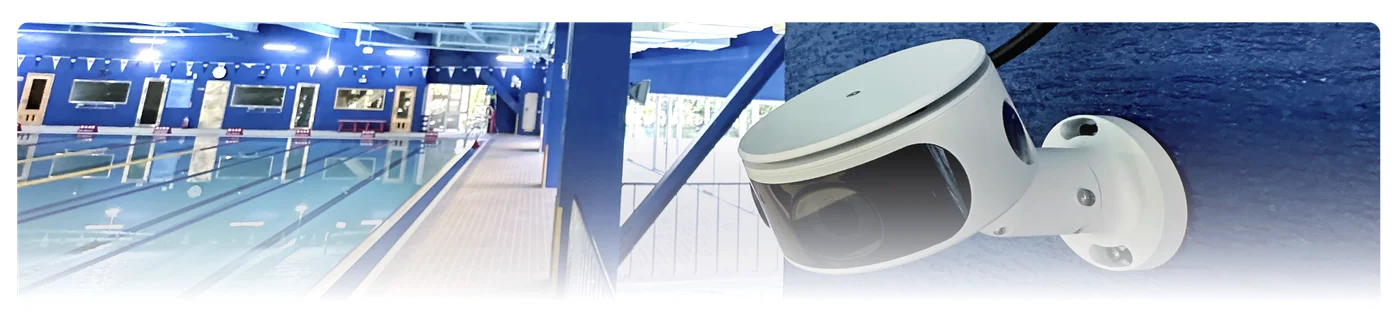
SAFE SWIM is Fortune AI's dedicated pool-safety product. Its camera-based AI flags possible distress for trained lifeguards. Site validation must cover camera visibility, missed events, false alerts, notification delivery, and outages; the system does not replace active supervision
- 01
Monitor in real time
Continuously analyze activity in the agreed pool zones, with camera views and locations together.
- 02
Detect possible distress
Surface a possible-risk event with the affected zone and the relevant camera view.
- 03
Notify the lifeguard
Send the alert through the site's configured alarm and notification channels.
- 04
Respond and retain the record
The lifeguard assesses and acts on site. Keep alert, acknowledgement, and response records for follow-up.
Commercial pool buyer guide
Evaluate the camera, alert, and response path together
Review coverage, false alerts, missed events, notification delivery, outages, staff training, and on-site response before operational use.
Customer case study
Okinawa resort pool
Okinawa Kariyushi Resort EXES Onna announced its SAFE SWIM installation on August 8, 2025. The hotel describes a system that alerts monitoring staff to potentially distressed movement so the team can assess the pool and respond on site, and identifies Fortune AI as the developer.
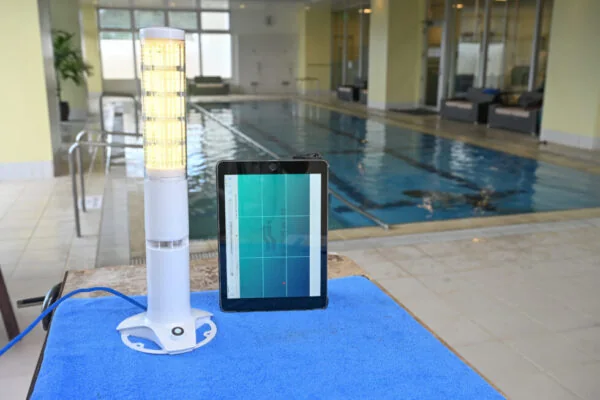
The facility
An operating resort pool in Onna, Okinawa, Japan.
The deployment
SAFE SWIM monitors the pool camera view and identifies the location of possible distress for the assigned monitoring team.
The response path
Staff receive the alert, assess the camera view and pool, and respond on site under the facility's emergency procedure.
Plan your pool deployment
Start with your pool and response team.
Bring your pool layout and camera views. We'll review coverage and the on-site alert path together.
FAQ
Drowning detection for your pool.
Clear answers on cameras, real-time alerts, validation, privacy, and cost.
Discuss your poolGeneral questions & other industriesSystem and cameras
What is an AI drowning detection system?
A camera-based drowning detection system analyzes pool footage for patterns that may indicate a swimmer in difficulty and alerts the assigned staff. SAFE SWIM is Fortune AI's dedicated pool-safety product: it flags possible distress and preserves the event and response timeline. An alert is not a confirmed emergency, and a missed alert must never be treated as proof that a swimmer is safe.
What to review Review detection, delivered notification, acknowledgement, and response as separate events.
Can we use existing pool cameras, or do we need underwater cameras?
SAFE SWIM works with standard network cameras and does not require specialized underwater cameras. Existing cameras may be reusable after a site survey checks their views, video quality, connectivity, and pool coverage. Camera reuse is not automatic: glare, blind spots, water conditions, and crowding must be assessed for your pool.
What to review Bring the pool layout, camera models, installation positions, and representative daytime and evening footage.
Can drowning detection replace lifeguards?
No. SAFE SWIM supports trained staff; it does not replace lifeguards or active supervision, and it does not replace the facility's emergency procedures. Evaluate the complete alert path, missed events, false alerts, and outages before operational use. Drills must be designed and supervised by qualified staff; never put a swimmer in danger to test a system.
What to review Recorded test conditions, reviewed outcomes, alert latency, and a documented fallback procedure.
Alerts and response
How does SAFE SWIM alert lifeguards in real time?
When SAFE SWIM detects possible distress, it sends the assigned staff the pool location and camera view through the site's configured warning lights or messaging channels. The lifeguard assesses the situation and follows the facility's emergency procedure; the system is not limited to reviewing footage after an incident.
Before opening, verify delivery and acknowledgement with the actual response team. Record detection, notification, acknowledgement, and on-site response times separately.
What happens if a camera or network connection goes offline?
If a camera or network connection fails, the facility keeps normal supervision and emergency procedures in place and follows its documented manual-monitoring fallback. Define who receives the outage notice, how recovery is checked, and who approves a return to operation; lifeguard coverage must not depend on system availability.
Validation and privacy
How do we validate pool coverage under glare, crowding, and occlusion?
Map every monitored and excluded pool zone, then review each camera under representative daytime, evening, glare, crowded, occluded, and changing-water conditions. Document blind spots instead of assuming full coverage, and decide before opening whether the site needs another camera or a different mounting position.
What to review A zone map and exclusions tested under glare, crowding, and occlusion.
How do we measure missed detections and false alerts?
Qualified staff should define safe test conditions and acceptance criteria, then record reviewed events, operating conditions, outcomes, and observation hours. Report missed detections and false alerts separately, include incomplete evidence, and never place a swimmer at risk in order to test the system.
What to review Reviewed event counts, conditions, outcomes, and observation hours. Report missed events and false alerts separately.
How are pool-video access and retention managed?
Before deployment, the facility and Fortune AI agree on who can access footage, the permitted purpose, retention period, deletion process, and how an incident review may be shared. Limit access to authorized staff and necessary footage, following the facility's policy and applicable local privacy requirements.
Cost and planning
How much does a drowning detection system cost for our pool?
Request an itemized proposal covering pool zones, existing or additional cameras, alert equipment, installation, software, staff training, and ongoing support. Compare upfront and recurring costs for the same coverage and service scope, rather than comparing camera prices alone. Final pricing depends on the site survey and response setup.
Share your pool layout, camera details, opening hours, and alert recipients for a site-specific quote. Discuss a pool deployment
Which water-safety resources should inform our deployment?
CDC emphasizes continuous supervision of children. RLSS UK's technology guidance covers site suitability, visibility, fallback procedures, and staff training.