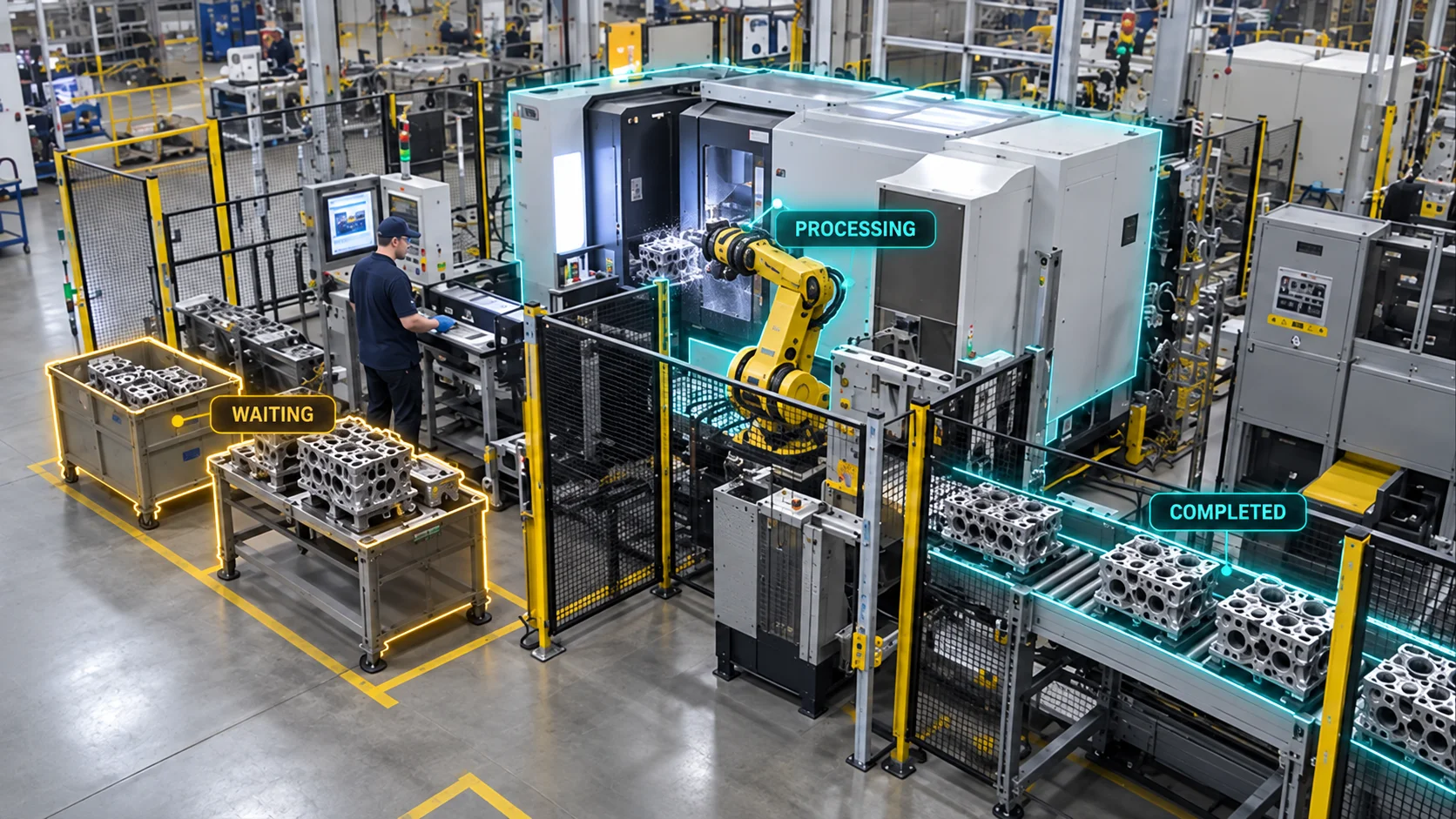
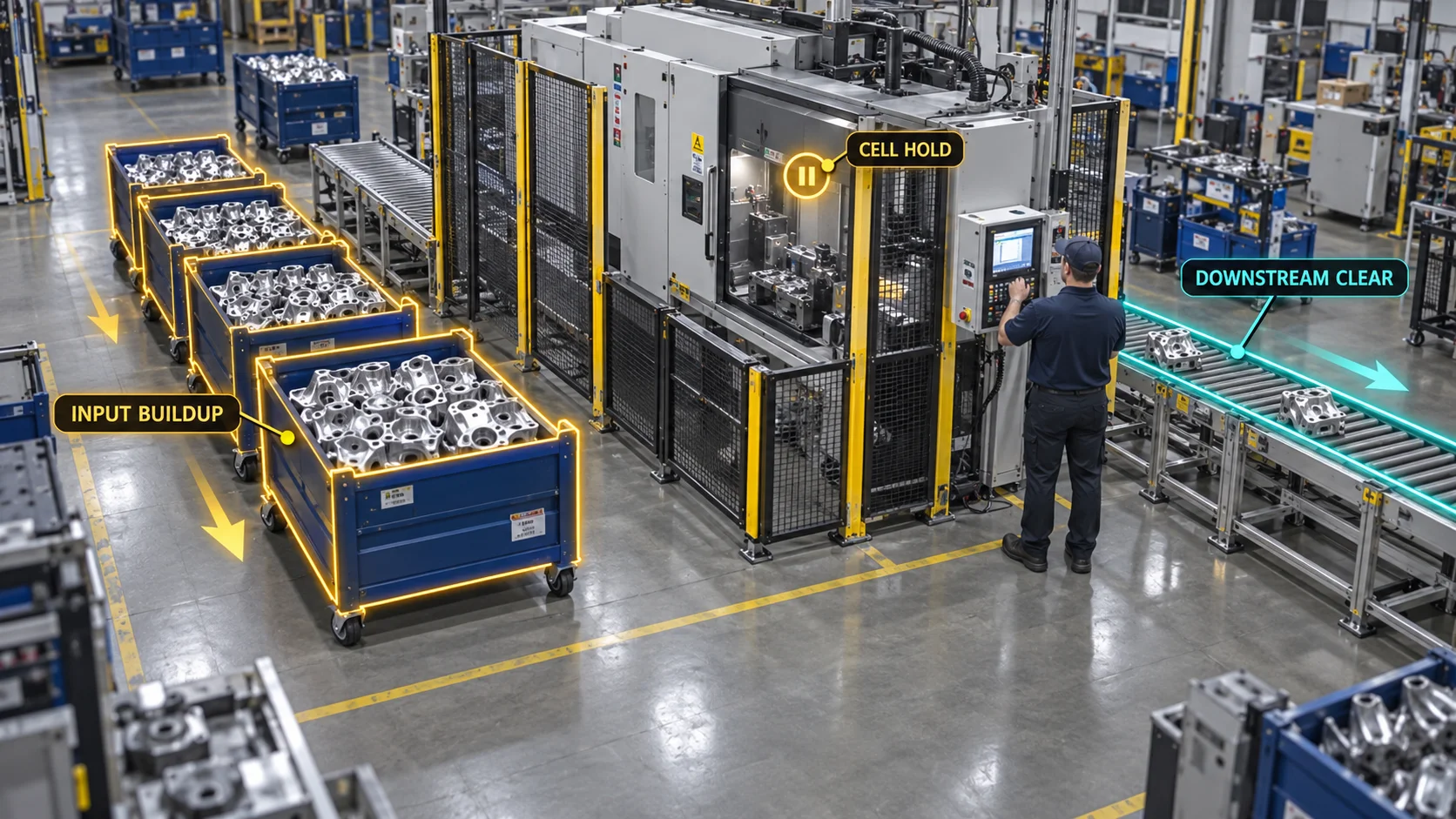
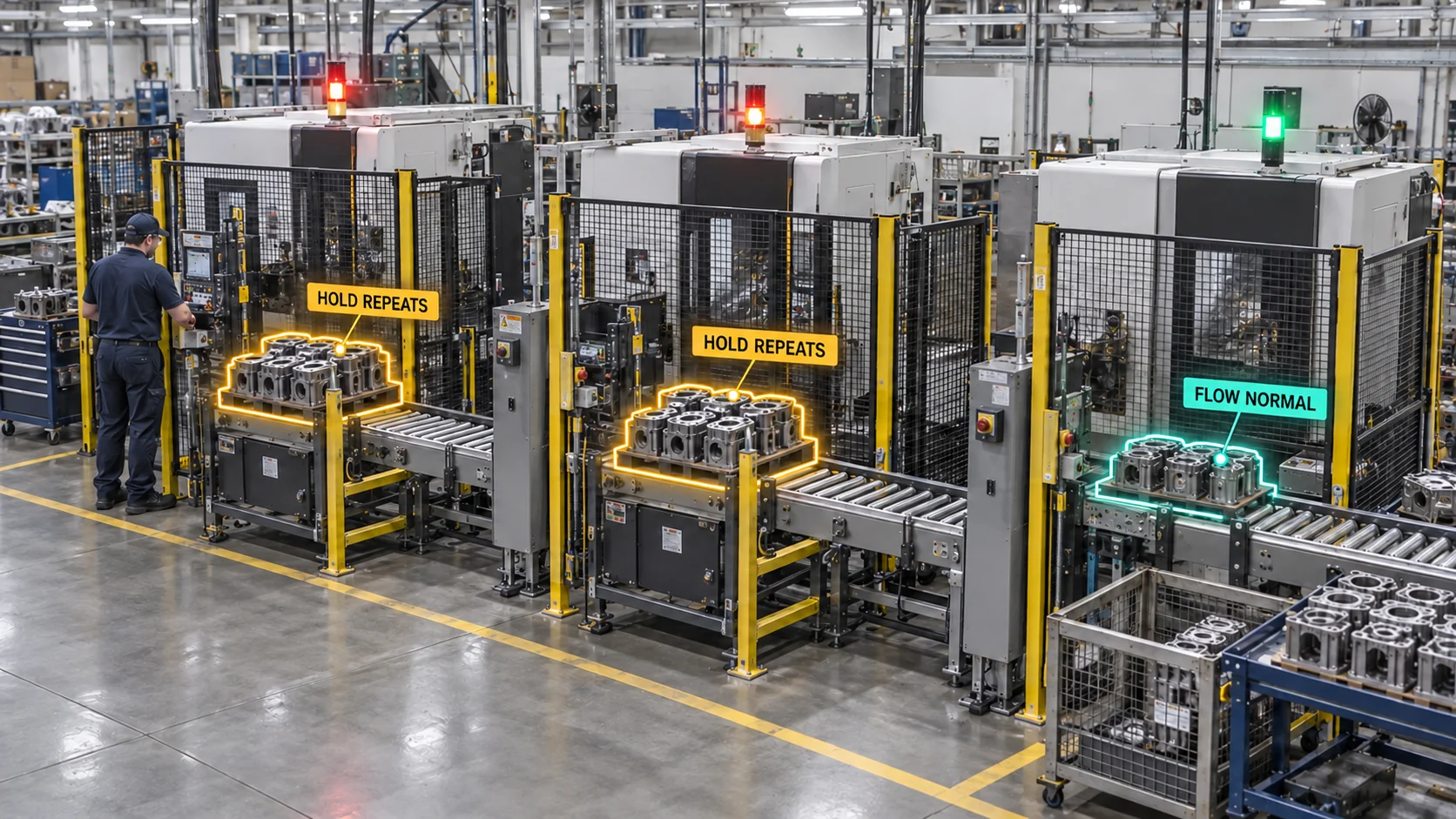
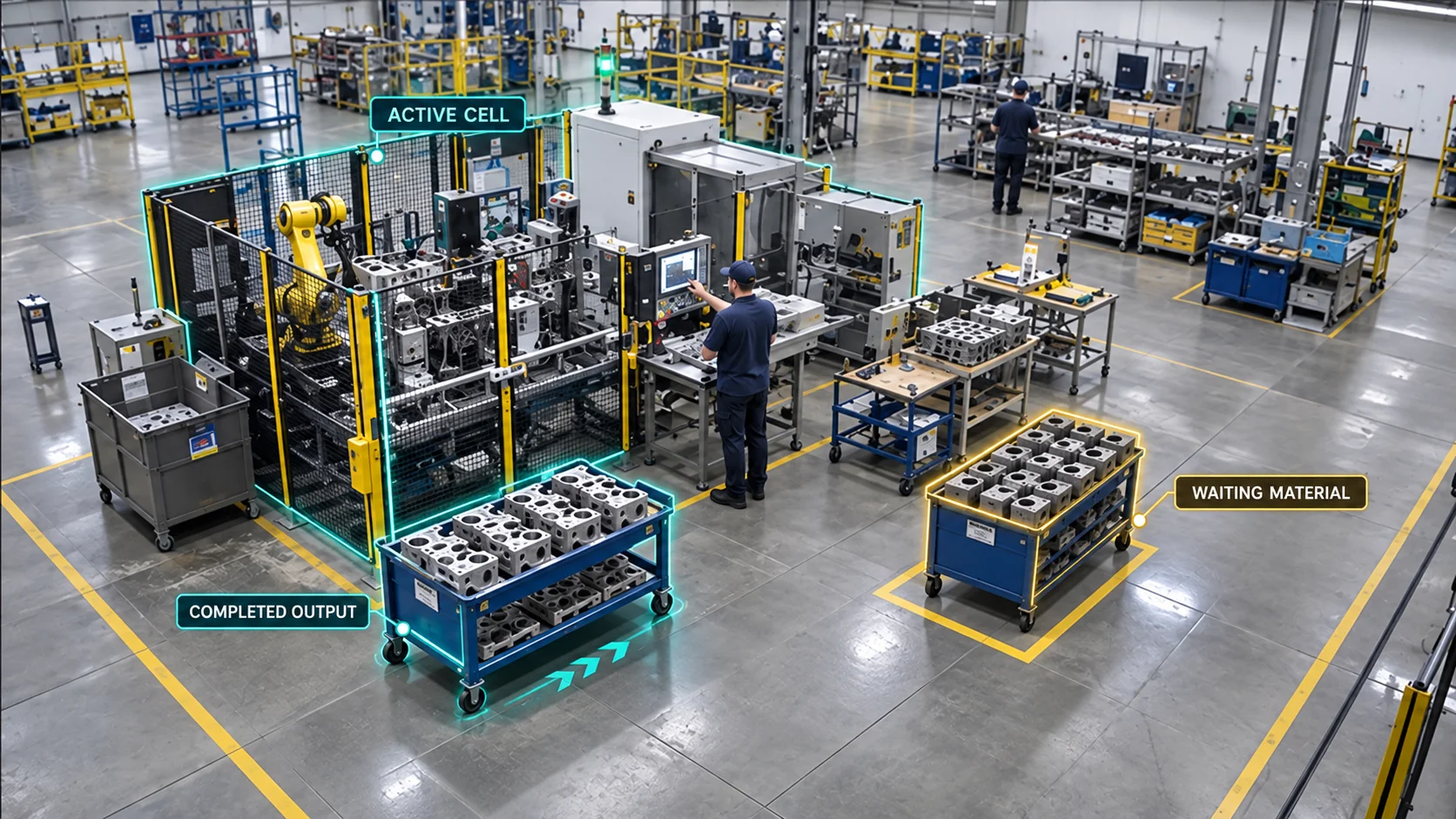
Cell B waits after each completed cycle
In this example, the delay starts after completion and clears when the next station is ready
- Repeated events
- 8
- Median delay
- 6m
- Recovery window
- 14m

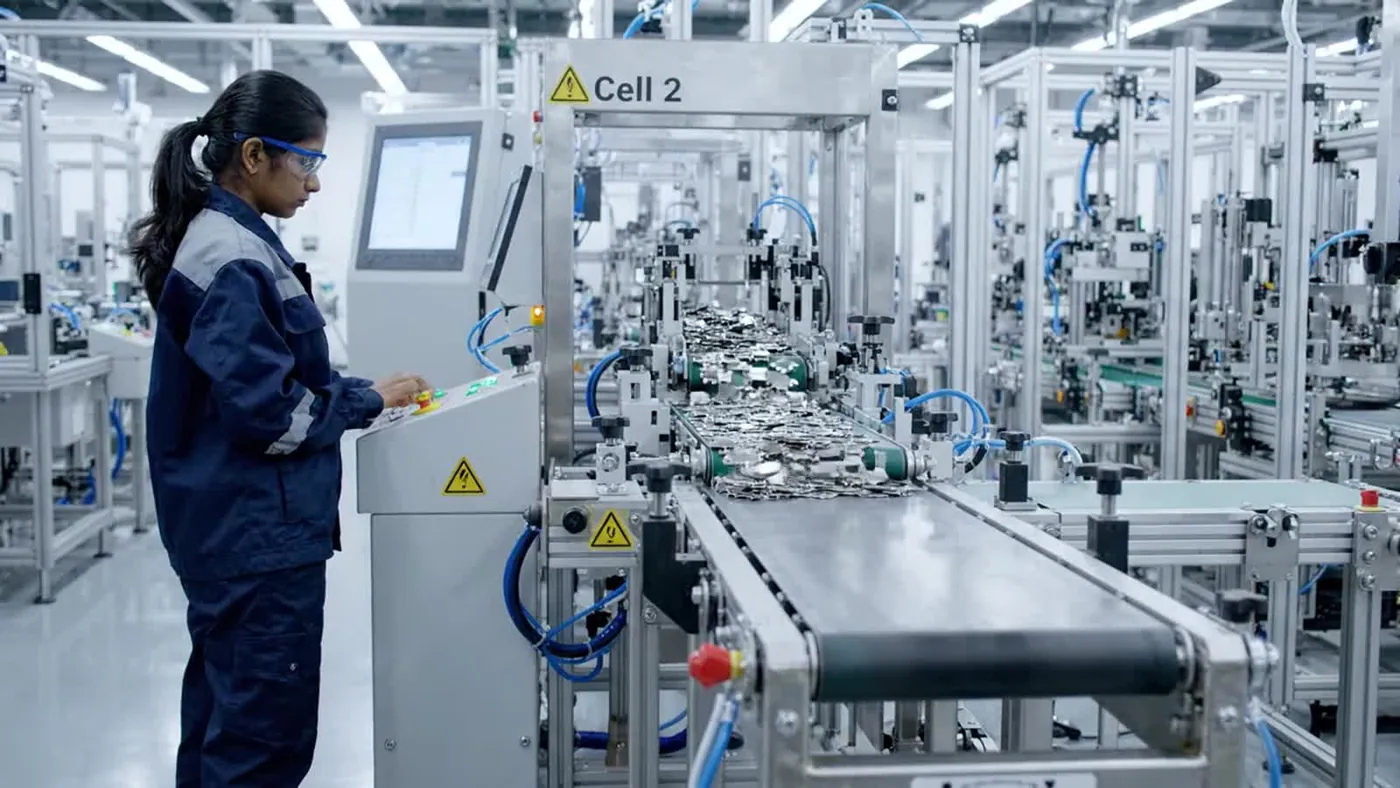
Manufacturing
Measure cycle delays, bottleneck recovery, and repeated exceptions at individual work cells
Request a demoStart with the decision
Define the expected cycle and the states your team wants to compare
CAM 05 · CELL B
Repeat delay matched
Live line analysis
Classify working, waiting, blocked, and recovery
Follow transfers between the selected work cells
Return repeat delay by station and shift
Line analysis ready every shift
Fortune AI platform
Align downstream release timing. Review line cycle time alongside the camera evidence for the same operating period.
Which work cell has repeat cycle delays? Cell B repeats the same cycle delay. Review the camera evidence, the measured line cycle time, and the next action: align downstream release timing.
From delay to recovery
Use the footage-backed answer to adjust line balance or the recovery process
Work-cell cycles
Separate slow processing from delayed handoffs with work-cell cycle measurements.
Manufacturing video analytics measures the sequence at a work cell: processing, completion, transfer, and the next cycle. Review repeated gaps to distinguish a slow process from a delayed handoff

Separate working, waiting, blocked, changeover, and recovery at a work cell.
Compare the true cycle before changing targets or operator coverage.

See where delay starts, how long it persists, and when flow resumes.
Focus improvement on the station that constrains recovery after a stop.

Group recurring process states by station, time window, and shift.
Separate one-off incidents from the exceptions worth redesigning.

Compare paid time with completed production output at the same cell.
Review waiting and blocked time before changing labor standards.
Start with one production decision
FAQ
Cycle definitions, short stops, machine records, and incomplete observations.
Discuss your site's requirementsGeneral questions & other industriesDefine a visible start and finish for one repeatable cycle. Compare processing, waiting, and transfer intervals for the same product family. Use the matching clip to review variation; video alone does not establish machine condition or part quality.
What to measureMedian and 90th-percentile cycle time, with incomplete cycles counted separately.
Agree on what visible running and stopped states look like. Collect repeated stopped intervals and review them with maintenance or production records. A stationary object is an observation, not an automatic fault diagnosis.
What to measureStop frequency and observed stopped minutes per workcell-hour.
Use cameras for visible work and material handoffs. Use PLC, MES, and quality records for machine states, accepted output, and rejects. Align timestamps and IDs before combining them; a camera-only count should not be presented as a complete OEE calculation.
What to measureMatched cycles and unmatched records, with each metric's data source identified.
Agree on the process, visible running states, observation period, and acceptance criteria. Combine workcell measurements with production-flow measurements when reviewing handoffs between stages.