
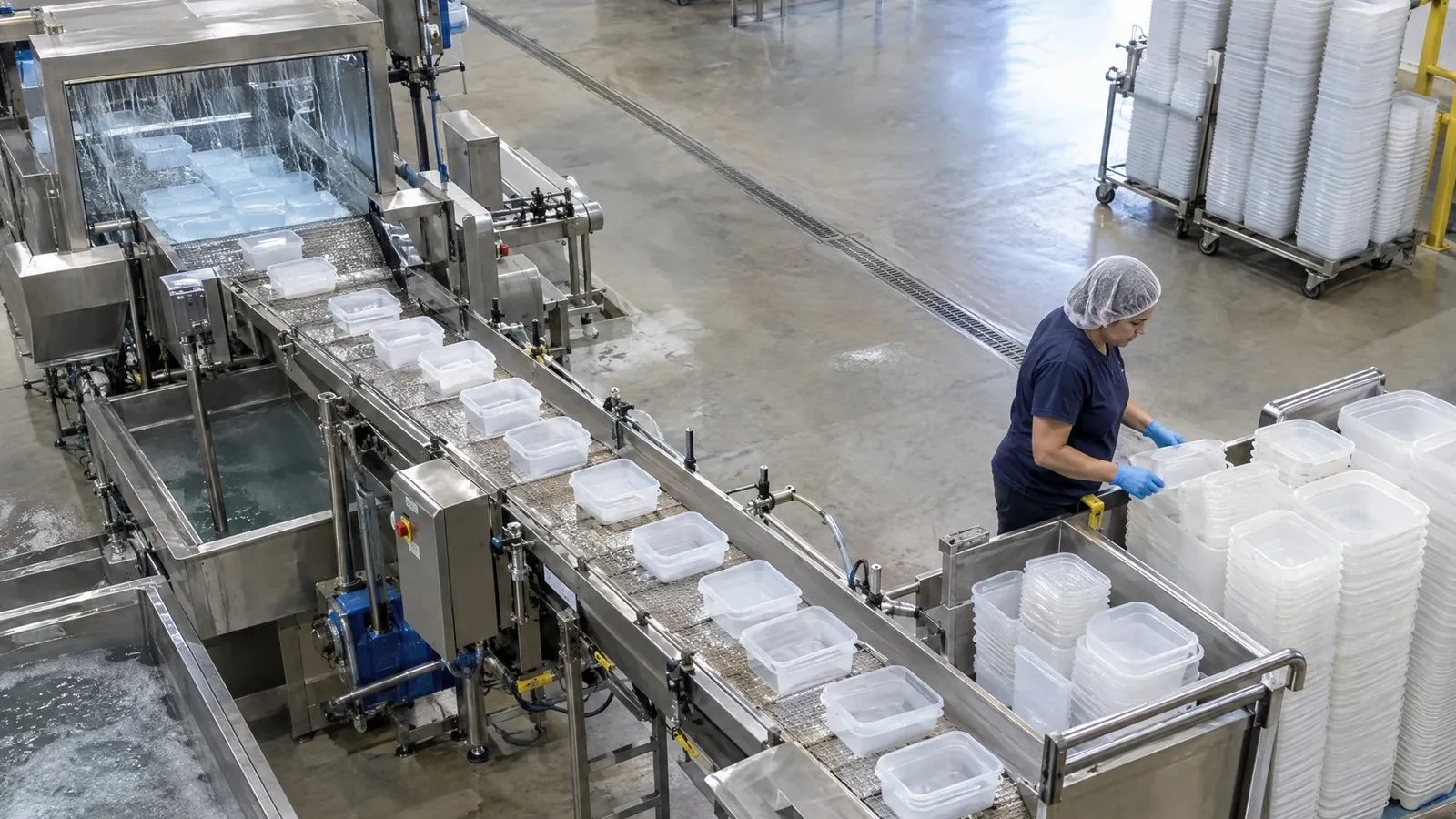
For Dispatch Goods, making reuse work at scale means understanding the economics of every item that comes back, gets washed, and returns to service.
Productivity is a major part of that equation. A faster conveyor does not necessarily mean a more productive operation. Product mix, loading patterns, staffing, and cleaning quality all influence how much usable output a team produces and what each item costs to process.
Dispatch Goods is working with Fortune AI to connect those factors, using camera-based observations alongside its existing operating records to build a clearer picture of performance on the production floor.
Understanding what drives cost per item
Across production operations, connecting reports to the activities behind them can be challenging. Teams move between products and activities throughout a shift, and reports across shifts can be difficult to verify against what actually happened on the floor.
Bringing visual information together with production records provides a clearer basis for understanding those activities and their contribution to output.
The collaboration is designed to bring observed activity and item output into that picture. By connecting counts, task tracking, and aggregate operational information, the teams are building toward a more useful view of productivity: how much the operation produces, what drives per-unit cost, and where there are opportunities to improve.
Fitting the way Dispatch Goods works
Dispatch Goods’ operation already runs on connected workflows: customer orders, driver collections, inventory, task tracking, and customer reporting.
Fortune AI began with a working item-counting model for the Bay Area wash line. The next step is integrating cameras and visual information with Dispatch Goods’ existing workflow, connecting observations to inventory, tasks, and customers so the data can support the decisions and reports Dispatch Goods already uses.
That connection matters. The number of items returned, the number processed, and the number successfully cleaned can differ. Keeping them distinct gives the team a better basis for understanding production losses, reconciling customer returns, and deciding where to improve the process.
Making output improvements measurable
By connecting production output with operational activity, Fortune AI helps make performance easier to understand and improvements easier to measure. This gives teams a clearer foundation for evaluating productivity and cost per item.
Building stronger evidence for sustainability reporting
Connecting operational data with customer records can also provide a more traceable foundation for sustainability reporting, including the activity data used in carbon, water, and waste calculations.