

A strong score can prove a model. A live facility still needs reliable cameras, clear alerts, human response, and reviewable evidence
The accuracy headline
A strong model score answers one important question
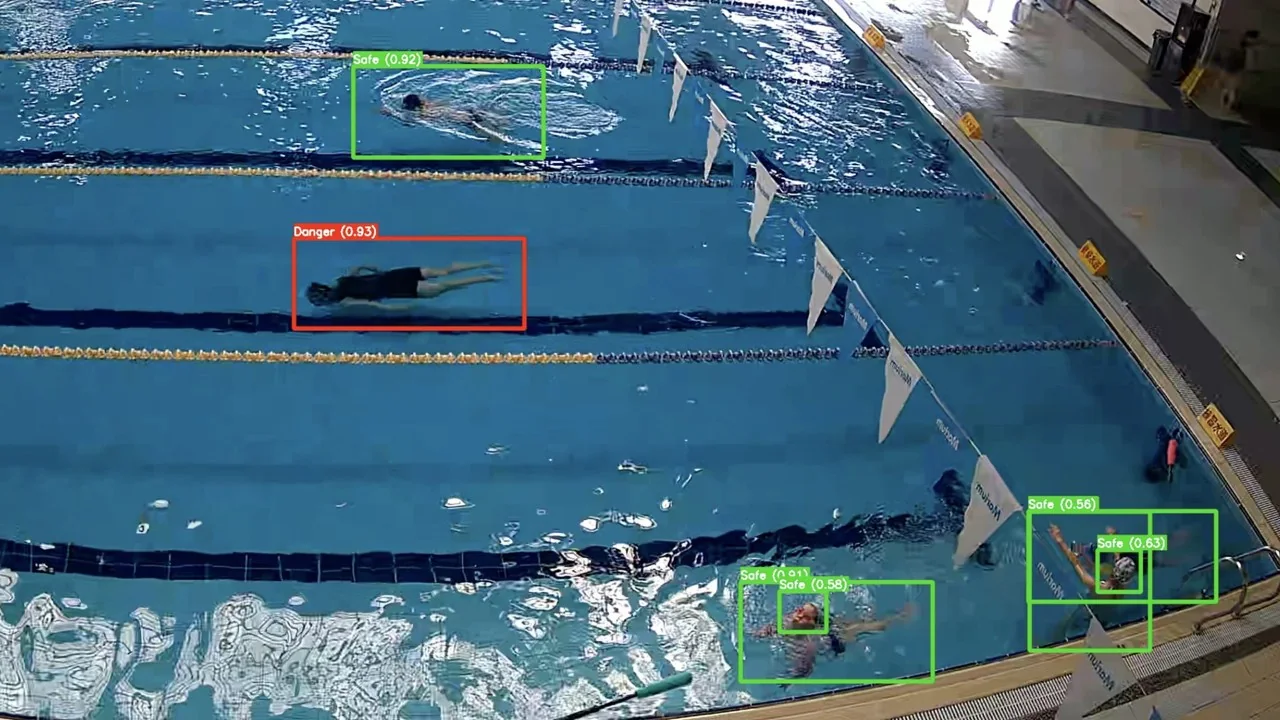
In Ontario, a student-built Virtual Lifeguard prototype reported 98.5% accuracy distinguishing swimming from drowning after training on thousands of backyard pool images. That is a meaningful technical achievement and a useful proof that a model can learn the visual pattern
The score describes performance on that test. A live facility adds moving glare, occlusion, crowded lanes, changing camera views, network conditions, alert delivery, and a trained team responsible for the response
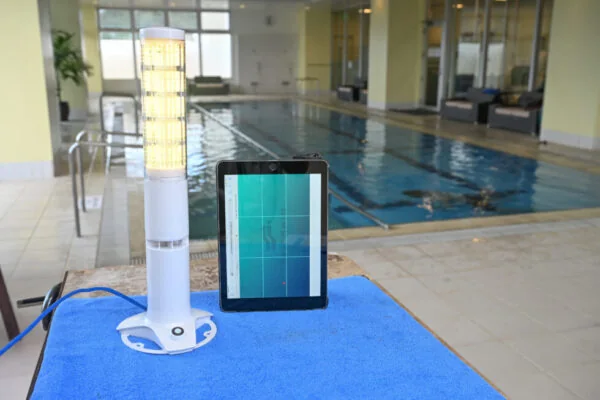
SAFE SWIM was designed for this next stage. It runs on cameras already installed at the facility, brings behavior consistent with a swimmer in difficulty to the assigned team, and keeps the event available for review. Trained lifeguards remain in control of the response
Source: Global News on the Ontario Virtual Lifeguard prototype
Beyond the model
Accuracy has to survive the whole operating loop
A live AI system meets camera placement, network conditions, local procedures, and the people expected to use its result. Each part affects whether a technically correct detection becomes a useful response
- 01
See the right moment
The model has to handle the actual glare, occlusion, crowding, camera angle, and activity patterns at each pool
- 02
Reach the right person
The alert has to identify the location and arrive through a channel the assigned team can act on immediately
- 03
Learn from every review
The footage, alert, and response timeline have to stay together so the team can confirm the event and improve the system
MIT CISR describes the broader enterprise transition as moving from pilots and AI capabilities to scaled ways of working. The system, process, and operating ownership develop together
In an April 2026 DIGITIMES Asia interview, Fortune AI founder Andrew Chen explained the same principle through SAFE SWIM. Error rate alone gives an incomplete view of a safety product. The alert and exact location must reach the trained team together, with the technology supporting the lifeguard's judgment
Further reading: MIT CISR on moving from AI pilots to scale · DIGITIMES Asia interview with Andrew Chen
The response loop
The product is designed around what happens next
SAFE SWIM keeps the workflow short. It observes selected pool zones, interprets a possible pattern in context, notifies the assigned team through the facility's alert path, and preserves the event for review
- Observe
Watch the selected pool zones
- Interpret
Check movement, duration, and location together
- Notify
Bring the possible event to the assigned lifeguard team
- Review
Keep the event and response timeline together
What the water taught us
Four requirements followed us out of the pool
Each requirement helps a strong model become a system people can operate
- Representative evidence
- Real footage from the operating site defines what the model has to recognize
- Site-specific calibration
- Camera height, glare, layout, lane use, and local procedures shape the measurement
- Immediate delivery
- The possible event and its location reach the assigned team through a clear alert path
- Human review
- The relevant footage and timeline let the team confirm the event and improve the procedure
The lesson for Fortune AI
Every real-world AI product has to close the loop
A warehouse and a swimming pool look different, but the deployment problem is familiar. Each site has its own camera views, blind spots, operating rules, and people responsible for acting on the result
Fortune AI carries the SAFE SWIM discipline into facilities. An operator describes what the team needs measured. The system builds the measurement, checks it on representative footage, and runs it on the cameras already in place
The output can be labor time, queue duration, flow, throughput, or another operating number. The number returns with the footage behind it, ready for the next shift review, report, API, or MCP workflow
High accuracy opens the door. A clear, reviewable operating loop earns daily use