
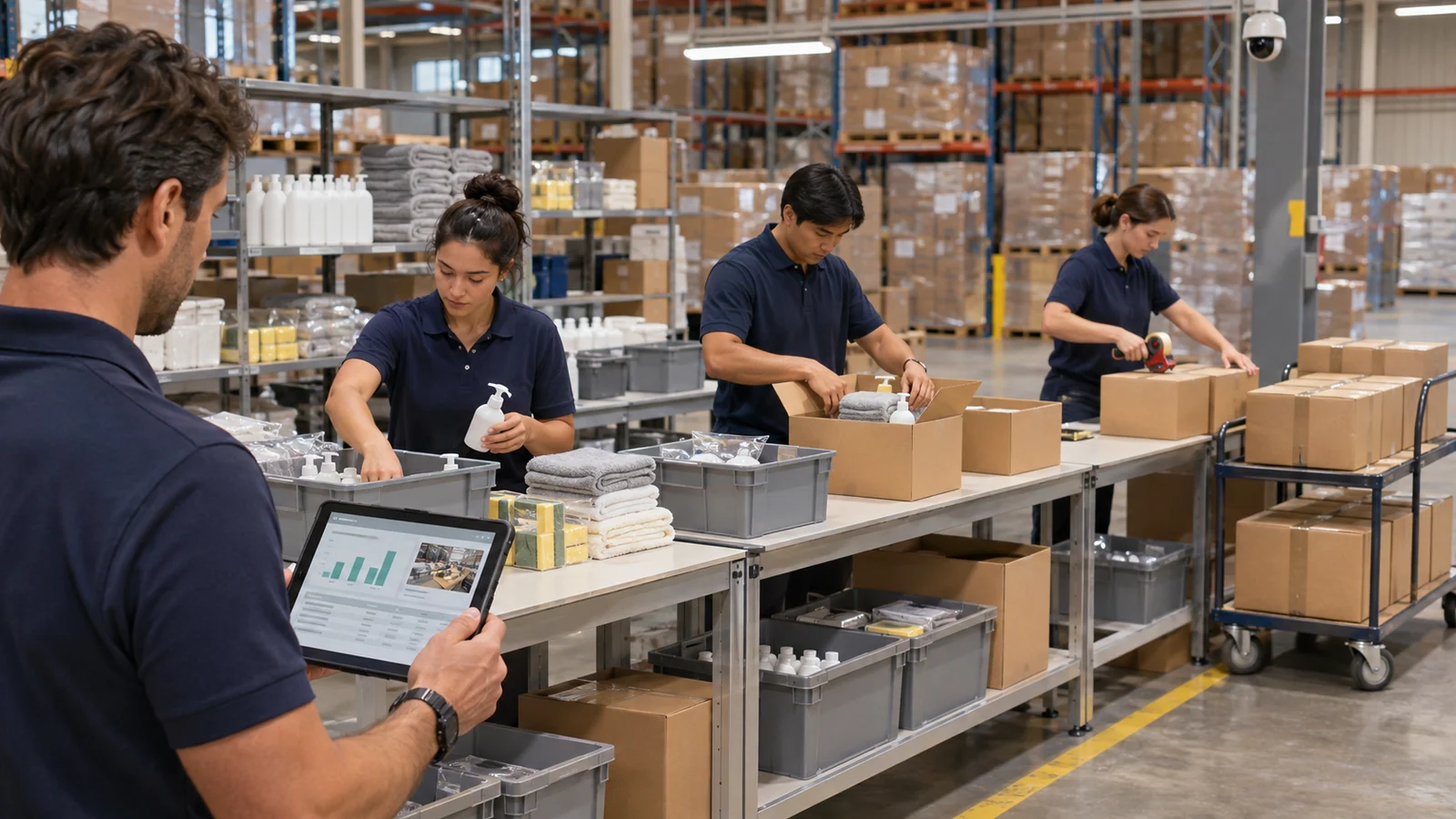
Kitting, repacking, relabeling, display builds. These value-added services bring revenue into your warehouse. But a busy processing line does not necessarily mean a profitable job.
See what the line actually completes
A repacking order takes longer than planned. Work piles up between stations. More people join the line, but completed output barely moves. Before approving overtime or quoting the next job, managers need to know: where is the time going, and what does it actually cost to finish each unit?
That is where our work with a logistics operator began.
Using the cameras already covering its processing line, Fortune AI counts completed items and tracks output by station and time period. Managers can see where production slows, where work accumulates, and whether a staffing or handoff change increases completed output.
The questions are practical. Is packing waiting for sorting? Is one station holding up the rest of the line? Did adding another person help, or simply move the queue somewhere else?
Compare those counts with the labor hours assigned to the job, and managers have a clearer basis for evaluating output per labor hour, planning capacity, and checking whether the price of a recurring service covers the work required.
For a 3PL running value-added services, that means making decisions about staffing, scheduling, and customer pricing with a record of what actually happened on the floor.
Put the production record to work
The same record also supports an operational audit. When a production total is questioned, the team can return to the corresponding footage and reconcile the reported quantity with the physical activity.
That evidence has two further uses.
First, billing. Connecting completed quantities to the customer’s job and agreed service rates gives finance a basis for checking whether billable work reached the invoice, with supporting evidence when a charge is questioned.
Second, damage disputes. Time-stamped footage helps teams review how goods were handled and their visible condition at recorded handoffs. When a customer reports damaged goods, the warehouse has a factual record to support the investigation and its response, rather than reconstructing the job from memory.
Start with one value-added service
Fortune AI handles camera integration, configuration, and ongoing operation, delivering the results through dashboards, exports, or connections to existing software.
The value starts with running the line better: more completed work from the labor available, clearer job costs, and evidence behind production records. Billing reconciliation and claims review extend the value of that same record.
Start with one value-added service where output, labor cost, or reported quantities are still difficult to reconcile. The camera above that station may already provide the view needed to make the job more productive, more accountable, and more profitable.
Andrew Chen | andrewchen@fortuneai.app
fortuneai.app