Food distribution & cold storage

Measure dock activity and staging time across cold storage

Measure truck dwell, dock-door occupancy, and pallet waiting across receiving, staging, and dispatch.

Request a demo

The operating problem

What the daily total does not explain

A reefer can sit at a busy dock while another door is unused. Pallets wait in ambient staging, the night pick floor is hard to review, and detention or delivery disputes arrive after the shift has ended.

Fortune AI platform

Which receiving periods create the longest truck dwell?

Balance door assignments. Review truck dwell alongside the camera evidence for the same operating period.

  1. 01 · AskWhich receiving periods create the longest truck dwell?
  2. 02 · VerifyReview the interval and supporting footage
  3. 03 · CompareTest truck dwell on matched periods

Which receiving periods create the longest truck dwell? Door imbalance is driving dwell. Review the camera evidence, truck dwell, and the next action: balance door assignments. The displayed values are examples for evaluating the workflow, not measured customer results.

From pain point to operating decision

Make the bottleneck measurable

Swipe to explore all four scenarios

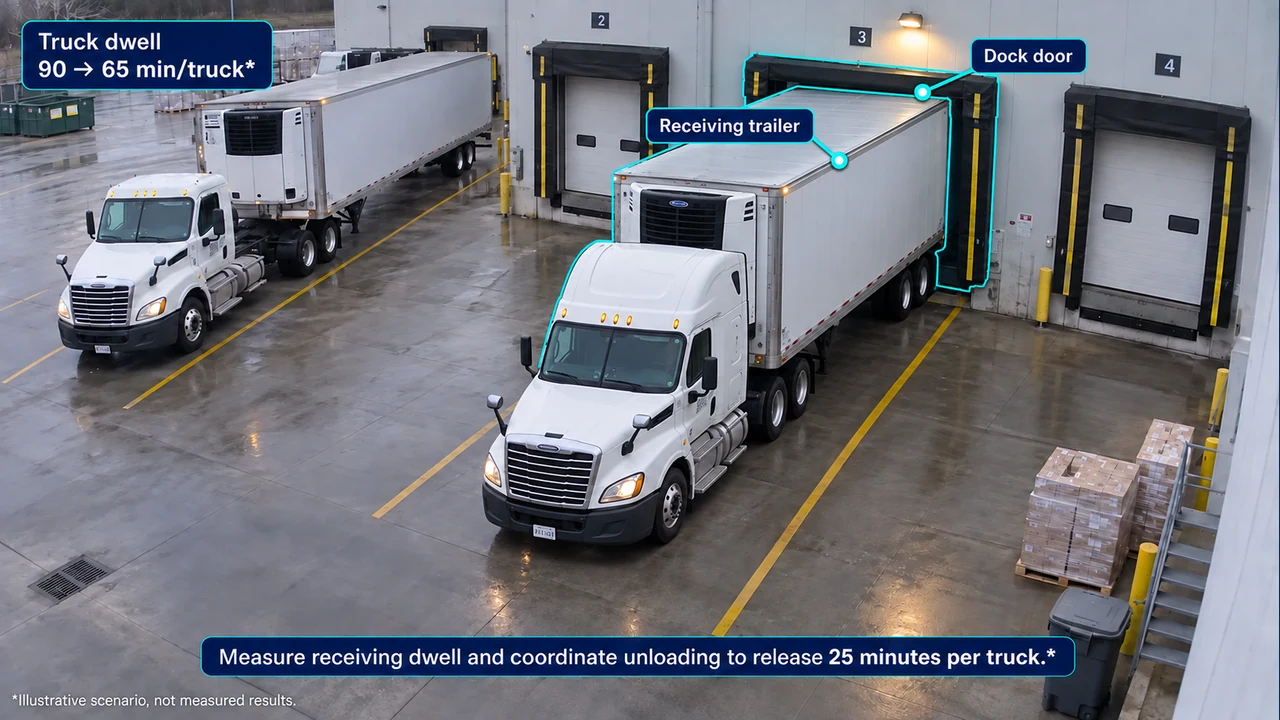
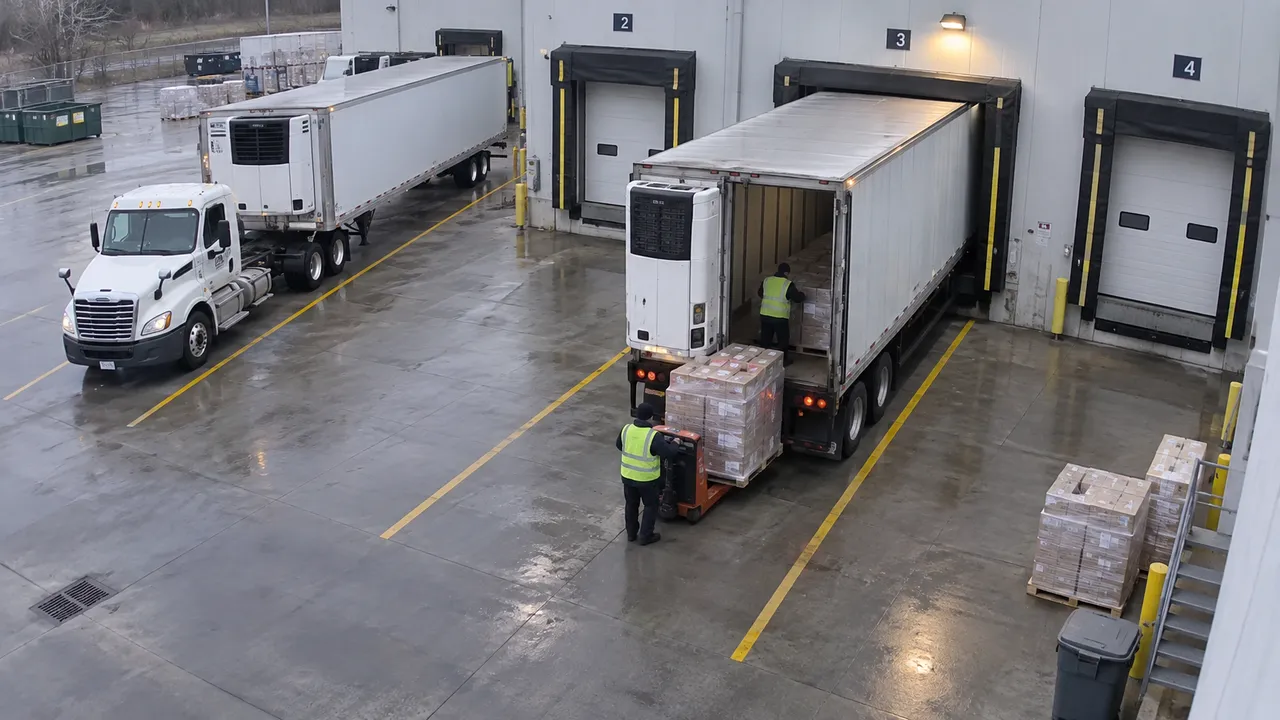
Fixed-camera view of truck dwell, with object-aligned annotations.View image at full size01

Truck dwell

Measure arrival-to-departure intervals and review loads beyond the team's agreed threshold.

Decision: Investigate detention with a time-stamped record.

Illustrative target · 90 to 65 min/truckMeasure receiving dwell and coordinate unloading to release 25 minutes per truck.Illustrative scenario, not measured results. Outcomes require the stated target to be achieved and validated on site.
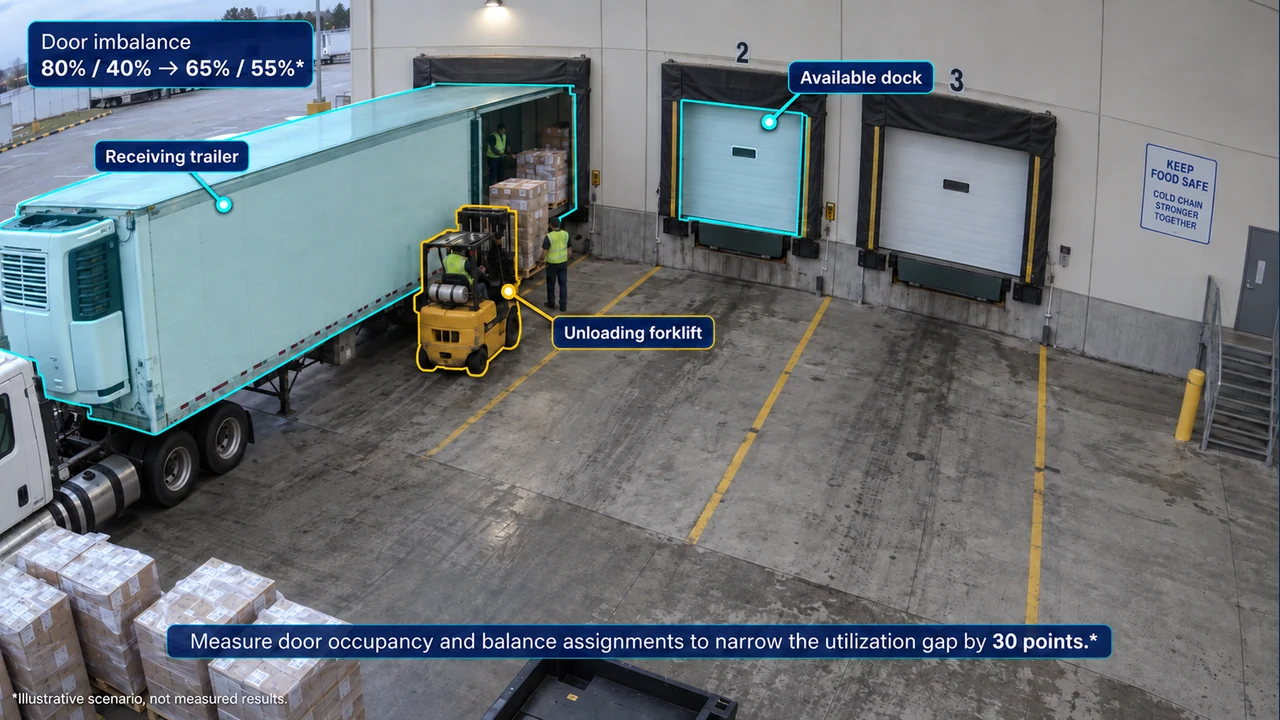
Fixed-camera view of door utilization, with object-aligned annotations.View image at full size02

Door utilization

Compare occupied and empty time by dock door and hour.

Decision: Separate a capacity shortage from uneven door allocation.

Illustrative target · 80% / 40% to 65% / 55%Measure door occupancy and balance assignments to narrow the utilization gap by 30 points.Illustrative scenario, not measured results. Outcomes require the stated target to be achieved and validated on site.
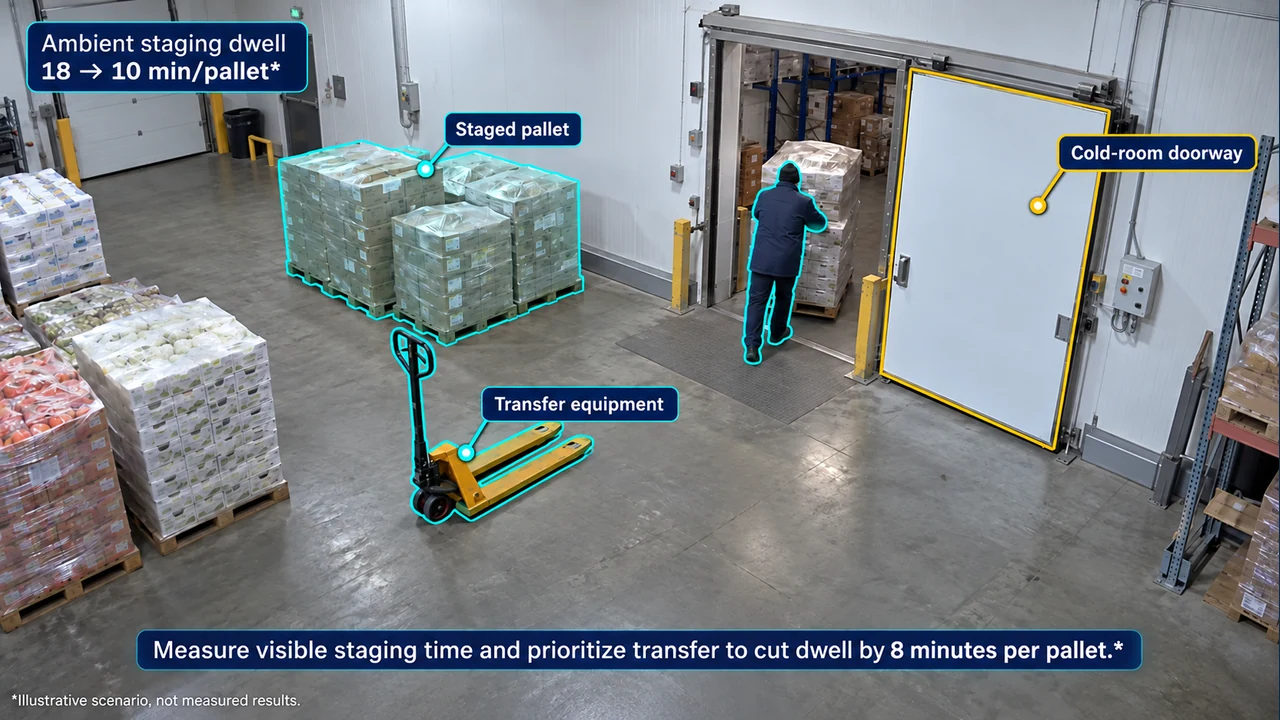
Fixed-camera view of ambient staging, with object-aligned annotations.View image at full size03

Ambient staging

Review how long visible pallets remain in an agreed staging zone and how long a cold-room door stays open.

Decision: Prioritize a handoff for operational review.

Illustrative target · 18 to 10 min/palletMeasure visible staging time and prioritize transfer to cut dwell by 8 minutes per pallet.Illustrative scenario, not measured results. Outcomes require the stated target to be achieved and validated on site.
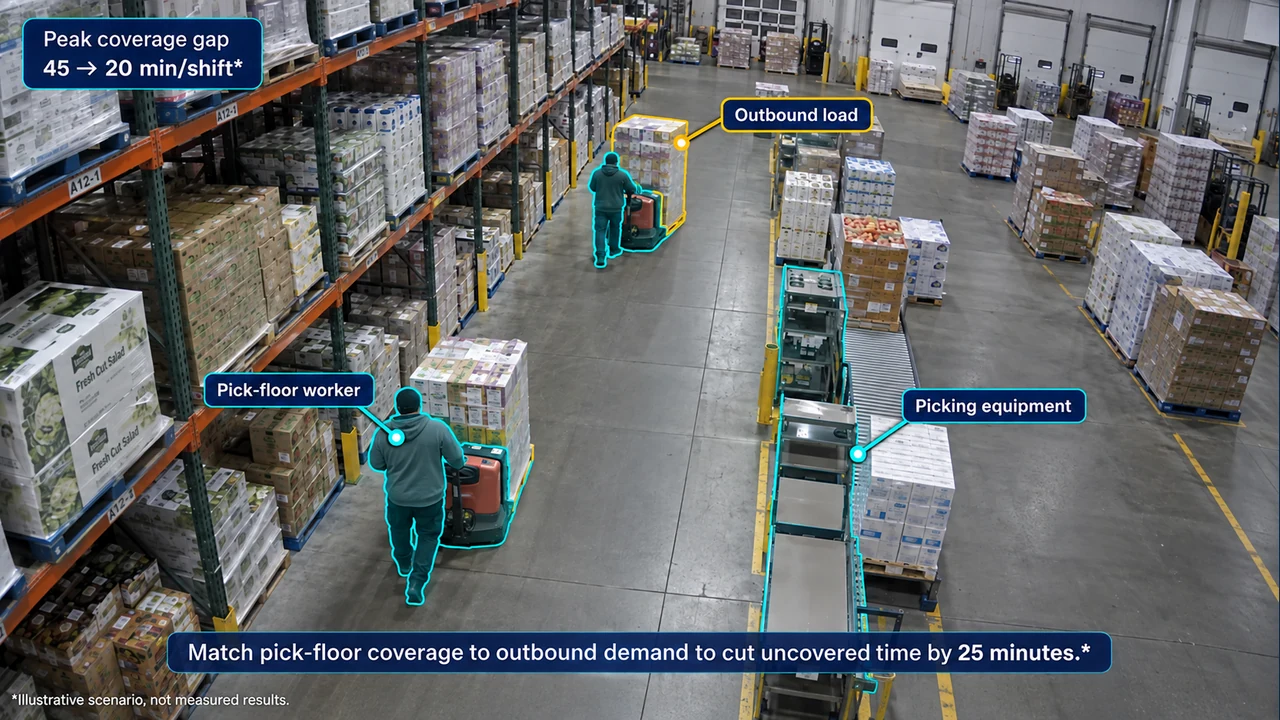
Fixed-camera view of pick-floor coverage, with object-aligned annotations.View image at full size04

Pick-floor coverage

Count workers present by zone and shift; compare with shipment records when available.

Decision: Review whether coverage follows outbound demand.

Illustrative target · 45 to 20 min/shiftMatch pick-floor coverage to outbound demand to cut uncovered time by 25 minutes.Illustrative scenario, not measured results. Outcomes require the stated target to be achieved and validated on site.

FAQ

Questions before measuring cold-storage flow.

Truck dwell, door occupancy, ambient staging, records, and temperature-data boundaries.

Discuss your site's requirementsGeneral questions & other industries

How do we investigate reefer detention time?

Separate visible arrival, door occupancy, loading, and departure. Reconcile the timeline with appointment and carrier records before reviewing a charge. Camera dwell is supporting evidence, not a contractual determination of detention liability.

What to measureObserved intervals, missing coverage, and the corresponding appointment record.

Which pallets are waiting too long outside cold storage?

Measure visible staging intervals at agreed boundaries and send exceptions for staff review. Join shipment and temperature records when permitted. A camera can show time and location, but cannot establish product temperature, spoilage, or food safety.

What to measureAmbient-zone dwell linked to shipment records; temperature remains a separate source.

Do we need more dock doors or better allocation?

Compare occupied and available doors against arriving loads and staffing. Review whether delays persist across all doors or only specific assignments. Consider temperature zones and load compatibility before moving work to a free door.

What to measureDoor occupancy, queue time, and compatible loads per observed hour.

What scope and privacy requirements should we agree on?

Camera footage measures visible dwell and door activity, not product temperature or food safety. Load numbers, shipment records, and temperature data require separately agreed integrations.

Getting started

Start with one dock view

Share a clip showing arrivals, occupied doors, and departures.

Plan your pilot

Choose the first operating question

Request a demoExplore related operating examples