
Direct answer
What can winery and packing-line video analytics measure?
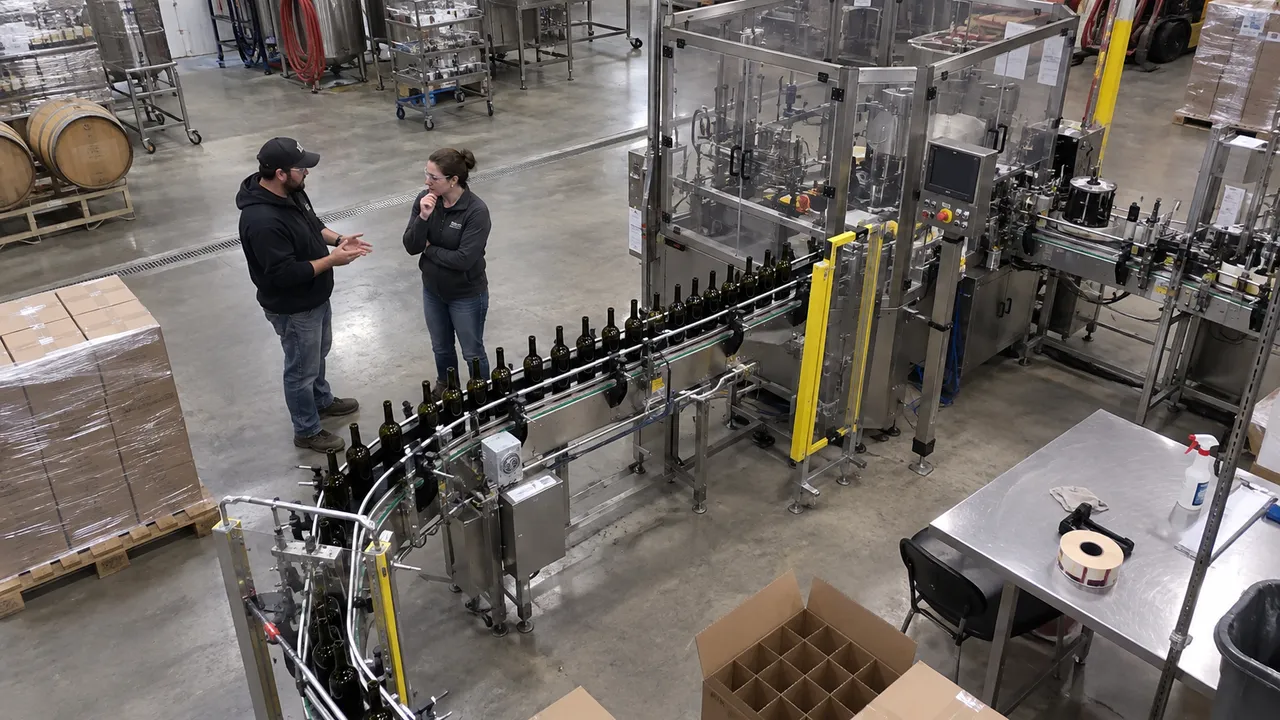
Winery and packing-line video analytics can measure visible running and stopped time, units past an agreed counting point, labor coverage, staging dwell, and dock handoffs. Align those observations with authorized shift and production records; use quality, lot, and traceability systems—not video—to establish product identity or specification.
01 · Define the states
Which line states should be measured?
Running
- Units cross the agreed counting point
- Product and packaging move through the visible process
- The observation window and product run are identified
Starved or blocked
- The upstream line lacks input or the downstream handoff cannot accept output
- Keep the visible wait separate from an equipment fault
- Review the preceding and following stage in the same interval
Planned or unplanned stop
- Changeover, sanitation, break, maintenance, or unresolved interruption
- Use authorized records to assign the final cause
- Leave uncertain intervals unresolved
02 · Explain lost line time
How do you find repeated bottling or packing-line stops?
- Choose one counting point. Confirm that units can be observed consistently across normal and peak production.
- Define running and stopped time. Set minimum durations and separate changeovers, sanitation, breaks, and missing coverage.
- Review the surrounding handoff. Check whether the line is starved upstream, blocked downstream, waiting on labor, or interrupted at the equipment.
- Compare the same product and shift conditions. Product mix, package format, season, and crew plan can change the baseline.
03 · Keep traceability intact
How should camera observations connect to production and traceability records?
Use a stable line, work-order, batch, lot, case, pallet, or shipment identifier from the operating system. Join the camera interval only at an agreed event such as a counting point, pallet completion, staging entry, or dock handoff. Preserve the source record and supporting clip without replacing the traceability ledger.
| Source | What it can establish | What it cannot establish alone |
|---|---|---|
| Camera view | Visible line state, count, wait, movement, and handoff time. | Hidden contents, lot identity, quality, or shelf life. |
| Production record | Work order, product run, planned output, and recorded cause. | What visibly happened between missing or delayed entries. |
| Traceability record | Product, lot, logistics unit, location, and trading event. | Every visible cause of waiting or interruption. |
04 · Pilot one line decision
How should a winery or packing-line analytics pilot start?
Select one line, counting point, product run, and operating decision. Include both running and stopped periods, define exclusions before review, align shift and output records, and report the sample, missing footage, unmatched events, and uncertainty with the result.
Discuss your line and counting pointSources and method
What this guide is based on
This page combines Fortune AI's operating-measurement method with the sources below. It does not report customer performance unless a result is explicitly identified as a customer result.
- GS1 Traceability standardImplementation guidance for traceable events, logistics units, and wine or fresh-produce supply chains.
- GS1 Fresh Fruit and Vegetable Traceability GuidelineHow packing, repacking, shipping, receiving, product identifiers, and logistics units remain connected in produce operations.